


Advantages of Vacuum Brazing in Automotive Parts Machining
2025-12-12



Vacuum brazing, as a high-precision, high-cleanliness metal joining process, is increasingly widely used in the automotive manufacturing industry. With the ever-increasing demands for lightweight, high-efficiency, and durable automobiles, traditional welding methods are no longer sufficient to meet performance requirements in the machining of certain precision parts. Vacuum brazing, with its superior join quality and process stability, has become an ideal choice for machining many types of automotive parts.
First, vacuum brazing offers the advantages of high-strength and high-reliability joins. Heating and brazing filler metal melting are completed in a vacuum environment, avoiding oxidation and contamination, resulting in a denser joint structure, a cleaner interface, and excellent weld strength. This is crucial for automotive parts subjected to high loads, high vibrations, or high-temperature environments, such as turbocharger assemblies, hydraulic system components, and engine seals.
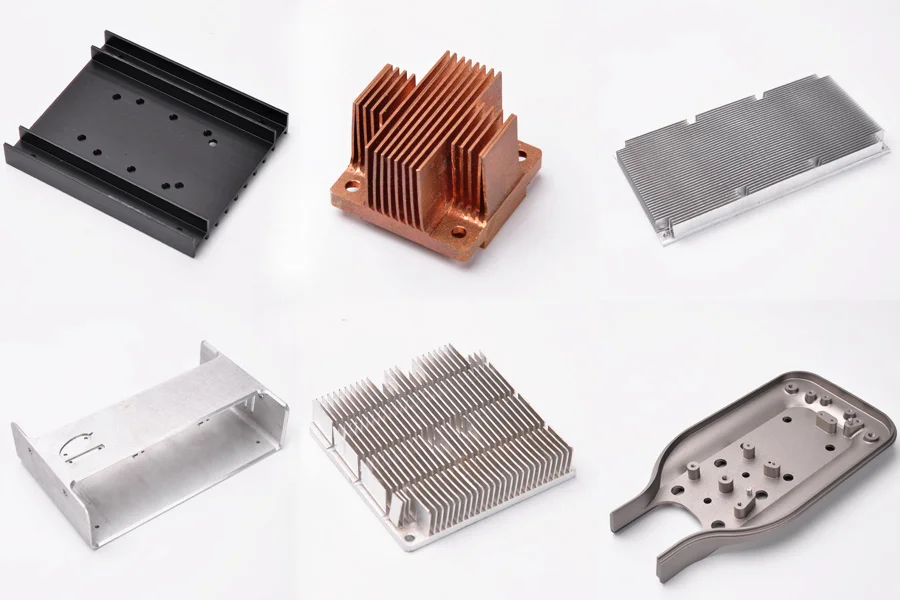
Second, this process enables one-step joining of multi-material, highly complex structures. Modern automotive parts commonly use combinations of aluminum alloys, stainless steel, high-temperature alloys, and even copper-based materials. Vacuum brazing can achieve reliable joins without compromising material properties. Meanwhile, for components with complex channels, thin-walled structures, or precision dimensions, such as radiators, oil coolers, and EGR coolers, vacuum brazing ensures minimal overall deformation, meeting high-precision requirements.
Furthermore, vacuum brazing offers excellent batch consistency. Its processing relies on precise temperature profile control and a stable vacuum environment, enabling consistency in mass production and reducing defect rates. This controllable process stability is particularly important for the automotive industry, which has large-scale production and stringent quality standards.
In addition, vacuum brazing contributes to achieving lightweight automotive design goals. By employing thin-walled components and efficient heat transfer designs, vacuum brazing allows for weight reduction while maintaining strength, thereby improving overall vehicle energy efficiency and environmental performance.
Vacuum brazing offers significant advantages in automotive component manufacturing, including strong connections, low deformation, high precision, and mass production capabilities, helping companies improve product quality and manufacturing efficiency. As the automotive industry continues to evolve towards energy conservation, high performance, and lightweighting, the application prospects of vacuum brazing will become even broader.
Related news
2025-12-10

 Inquiry Hotline:


Add whatapp

Add WeChat