


How to Determine the Quality of FDM Prototyping Products
2025-09-04



With the widespread adoption of 3D printing technology, FDM prototyping has become widely used in product R&D, prototyping, and small-batch production. However, the quality of FDM-molded products produced by different suppliers or equipment can vary. For companies and designers, determining whether FDM prototyping products meet quality standards is a crucial prerequisite for ensuring R&D progress and reducing costs.
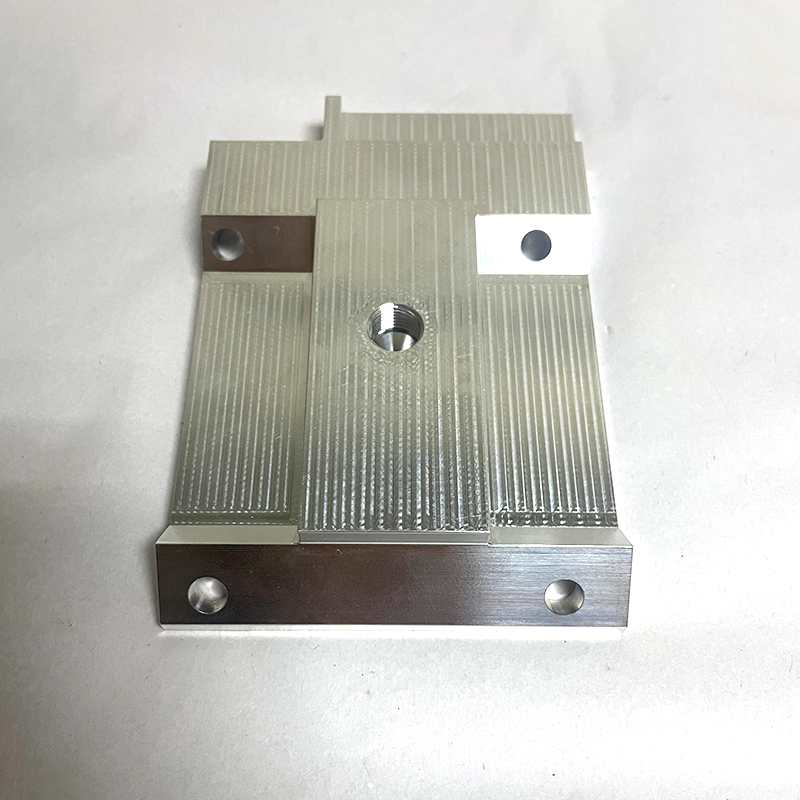
First, consider appearance accuracy. Qualified FDM-molded products should exhibit clear contours and consistent surface quality. Obvious surface burrs, fractures, warping, or excessive burrs indicate issues with the printing parameters or equipment accuracy. Furthermore, overly pronounced layer marks can affect subsequent assembly and usability, making flatness and consistency key evaluation criteria.
Second, consider dimensional accuracy. FDM products are often used to verify the rationality of design dimensions, so the actual build dimensions must maintain a high degree of consistency with the design drawings. Generally, a deviation of ±0.2mm is acceptable for routine prototypes, but for precision parts, the requirements are higher. Exceeding this tolerance can impact assembly and testing reliability.
Third, examine mechanical properties. While FDM prototypes are primarily used for verification, their strength and durability are still crucial. Qualified FDM products should possess basic compressive, flexural, and impact resistance, meeting the requirements for typical assembly and use scenarios. If a product breaks under even slight stress, it suggests substandard material selection or the printing process.
Fourth, material selection is also a key factor in determining quality. Different plastic filaments (such as PLA, ABS, and nylon) vary significantly in strength, heat resistance, and toughness. A quality FDM product depends not only on the printing process but also on whether the selected material meets the application requirements.
Finally, consistency and stability are crucial. High-quality FDM molded products should ensure consistent performance throughout the batch printing process, without significant variability between builds. Only stable process parameters and reliable equipment performance can ensure that the final product meets standards.
To determine whether an FDM prototyping product meets quality standards, a comprehensive assessment must be made of aspects such as appearance accuracy, dimensional accuracy, mechanical properties, material selection, and stability. Understanding these key factors will allow companies to better utilize FDM technology to improve R&D efficiency and ensure reliable product verification.
Related news
2025-12-10

 Inquiry Hotline:


Add whatapp

Add WeChat